Tired of a cluttered kitchen where groceries spoil fast and dinner prep feels like a never-ending battle? You’re not alone. Most home cooks waste hours searching for tools, tossing expired food, and rushing through stressful meals in cramped, chaotic spaces.
The good news: you don’t need a full remodel or expensive overhaul. Small, smart upgrades can cut clutter, slash food waste, and make cooking smoother and more enjoyable every day.
This guide reveals practical kitchen organization tricks, space-saving storage ideas, and modern tools that deliver real results. A compact vacuum sealer for food stands out as one easy win, keeping meats freezer-fresh for months, produce crisp longer, and batch-prepped meals ready without spoilage worries.
Ready to reclaim your kitchen and turn meal time into something effortless? Let’s explore the upgrades that actually work.
Key Takeaways
- Small, targeted kitchen upgrades often work better than expensive renovations for everyday cooking
- Strategic organization and modern tools cut down on wasted time, clutter, and spoiled groceries
- Sustainable practices stick when the right equipment and routines are in place
Rethinking Kitchen Organization for Better Efficiency
The secret to easier cooking isn’t always buying more stuff. It’s about organizing what’s already there so you can find things in three seconds instead of three minutes. Set up your kitchen for how you actually cook, not how you imagine you should.
Decluttering and Creating Functional Cooking Zones
Let’s be honest: most of us only use about 20% of our kitchen tools regularly, but the other 80% still fill up our drawers and shelves. Why do we let that happen?
Grouping things by task, zoning, just makes sense. Coffee maker, mugs, filters, and sugar in one spot for morning routines. Oils, spices, and spoons near the stove for cooking. It cuts out all those extra steps we never notice until we’re mid-recipe and everything feels out of reach.
Start by ditching duplicates and tools that do the same job. Three vegetable peelers? Probably overkill. Donate the extras and use that drawer space for stuff you actually need close by.
Common kitchen zones to consider:
- Prep zone: cutting boards, knives, mixing bowls
- Cooking zone: pots, pans, utensils, oils, spices
- Baking zone: mixing tools, measuring cups, baking sheets
- Beverage zone: coffee/tea supplies, mugs, water bottles
- Cleaning zone: dish soap, sponges, towels
Smart Storage Solutions That Maximize Space
Square containers just win. They fit together without wasting space, and when you decant your dry goods into them, you gain a surprising amount of room. Switching to glass jars for things like flour and pasta can free up about a quarter of your shelf space.
Vertical storage is a game changer. Stackable shelf risers let you see everything at a glance. Stick some adhesive hooks inside cabinet doors for measuring spoons or pot lids, no more rummaging.
Deep drawers? Try adjustable pegs to keep pots and pans from clattering around. Pull-out organizers under the sink make it way easier to grab what you need without crawling on the floor.
Mount a magnetic strip on the wall or backsplash for your go-to metal tools. That frees up drawers and gets you to what you need faster.
Keeping Counters Clear for Stress-Free Cooking
Empty counter space is golden. If your counters are covered with appliances you hardly use, you’ve got nowhere left to actually prep food.
Only leave out the gadgets you use at least three times a week. If the bread maker only comes out once a month, stash it. But if coffee is your lifeline, keep that machine handy.
Items worth keeping on counters:
- Coffee maker or kettle (if used daily)
- Knife block or magnetic strip
- Small cutting board
- One multipurpose bowl for prepped ingredients
A charging drawer sorts out the mess of cords from blenders, thermometers, and other battery-powered tools. Install a slim USB-C power strip inside a drawer, keep everything charged, and let your counters breathe. It’s a small win, but you’ll notice it.
Modern Kitchen Tools That Simplify Everyday Tasks
The right tools can seriously cut down your cooking time and keep your kitchen more organized. From gadgets that handle the boring stuff to storage that actually keeps food fresh, these essentials can make daily cooking feel manageable, even enjoyable, dare I say.
Time-Saving Tools That Streamline Meal Preparation
Chopping veggies and waiting for water to boil eats up time. Digital pressure cookers like the Instant Pot take care of rice, stews, and more in a fraction of the usual time. They use precise temps and sealed lids to get things done fast.
Smart meat thermometers send phone alerts when your chicken hits 165°F or your steak reaches medium rare. No more guessing or slicing into meat to check if it’s done.
Automatic pan stirrers handle sauces so you don’t have to stand at the stove. These gadgets attach to your pot and rotate, keeping things moving and freeing you up for other prep. Electric choppers blitz onions and herbs in seconds with one button.
Programmable coffee makers can start brewing before you’re even out of bed. Digital measuring cups show weights and volumes right on the cup, so you don’t need a pile of different cups and spoons.
Smarter Food Storage for Longer Freshness
Vacuum sealers pull air out of bags, stopping freezer burn and slowing spoilage. Prep meals on Sunday, seal them, and you’ve got fresh dinners all week. Meats last years in the freezer, and produce stays crisp way longer than usual.
Smart containers with freshness indicators help you track what’s about to expire. Some sync with phone apps to give reminders before food goes bad, less waste, more savings.
Produce-saving containers use vents to manage moisture and airflow. Berries last up to two weeks, and greens don’t wilt in three days. Glass containers with silicone seals keep leftovers fresh and don’t hang onto odors like plastic does.
Multi-Purpose Tools That Reduce Kitchen Clutter
Countertop smart ovens do it all: air fry, bake, toast, dehydrate. Roast a chicken, bake cookies, or make fries without firing up a big oven or storing a bunch of gadgets. They save space and energy, and the preset programs are actually handy.
Immersion blenders blend soups and sauces right in the pot, no more pouring hot liquids into a blender. They’re also great for smoothies and dressings, and take up hardly any room.
Adjustable measuring cups combine multiple sizes into one. Collapsible colanders fold flat, so you’re not sacrificing a whole shelf for a single tool. Multi-blade slicers swap attachments for julienne, spiral, or standard cuts, replacing several separate gadgets.
Sustainable Kitchen Habits Through Smart Upgrades
Smart tech is changing how we handle kitchen chores, turning repetitive decisions into simple, automated steps. The right upgrades make it easier to save time, waste less, and just default to more sustainable choices. It’s about building systems that work with your life, not against it.
Reducing Food Waste Through Better Planning
Inventory apps and smart fridges with cameras let you check what’s in your fridge before you shop. No more buying doubles or letting stuff rot in the back.
Setting up a digital pantry system takes maybe 15 minutes. Scan barcodes as you unpack groceries, set reminders for perishables, and you’re way less likely to find mystery moldy produce later.
Smart storage containers with freshness sensors aren’t for everyone, but if you buy in bulk or lose track of open packages, they can help. They give gentle nudges when food’s about to expire.
With visual access and automated reminders, you actually use what you have instead of letting it go to waste.
Making Meal Preparation More Efficient for Busy Households
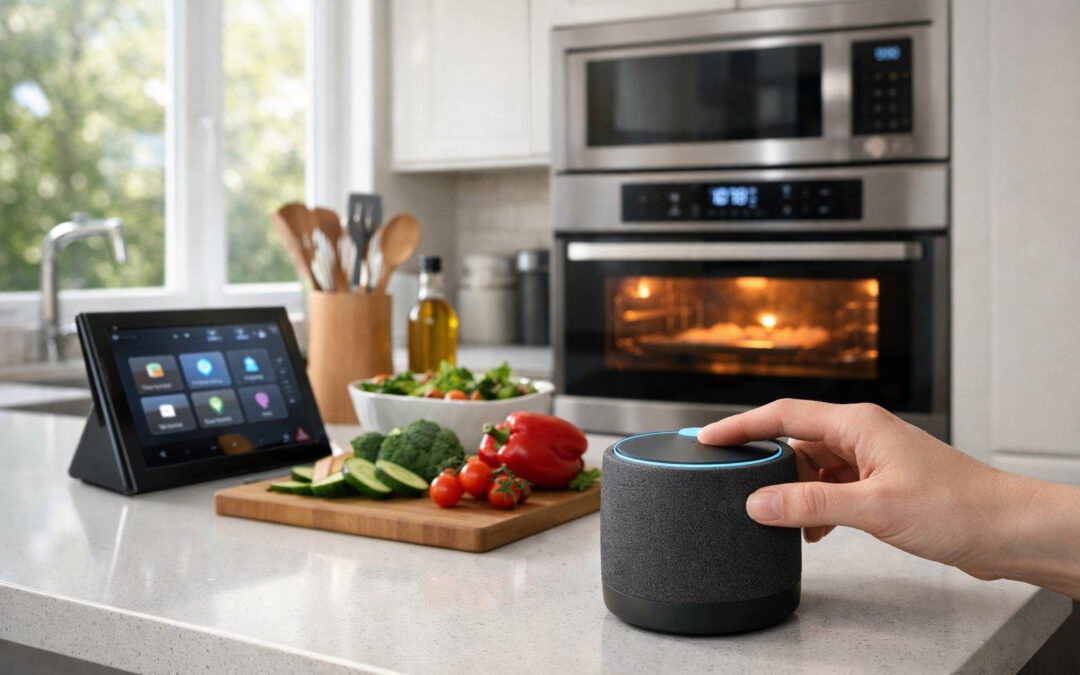
Voice-activated timers and smart displays are lifesavers when your hands are covered in flour or chicken. Just say what you need and keep moving, no need to wash up just to set a timer.
Programmable slow cookers and pressure cookers can be started from your phone. Dinner finishes right as you walk in the door, not an hour early or late.
Smart scales linked to recipe apps adjust ingredient amounts on the fly. Want three servings instead of four? The scale does the math as you go, so you don’t waste food or mess up the recipe.
Touchless faucets with preset measurements dispense exactly what you need. Tap with your elbow, fill a pot with one liter, and you’re done, no spills or overflows.
Creating a Kitchen That Supports Everyday Well-Being
Air quality monitors pick up on smoke or steam and automatically adjust the range hood. Better ventilation, less hassle, and you don’t have to remember to flip a switch.
Motion-sensor lights turn on as you walk in and adjust brightness based on the time of day. No more fumbling with switches when your hands are full or dirty, and it’s just easier on the eyes.
Countertop composters turn food scraps into fertilizer in hours, without any nasty smells. You empty it once a week and use the compost for plants, so much better than tossing scraps in the trash.
Water filtration systems built into smart faucets track how much you’re drinking and let you know when it’s time to swap the filter. Clean water, less guesswork, and no need for bottled water.
Frequently Asked Questions
People have a lot of questions about smart kitchen upgrades, costs, practicality, and whether these changes really make everyday cooking better. The best tweaks depend on your cooking style, your space, and what drives you nuts most often.
What defines a “smart kitchen” today?
A smart kitchen refers to a cooking space designed for efficiency, organization, and convenience. It often includes thoughtful layouts, practical tools, and modern technology that help streamline meal preparation and food storage.
Do smart kitchen upgrades require expensive renovations?
No. Many improvements involve small and affordable changes such as better storage containers, improved organization systems, or practical tools that simplify everyday cooking tasks.
How can kitchen upgrades help reduce food waste?
Smart storage systems and proper food preservation methods help extend the life of ingredients. When food remains fresh longer, households are less likely to discard unused items.
What are the most practical upgrades for busy households?
Time-saving tools, organized pantry systems, and efficient food storage solutions are among the most helpful improvements for people who cook frequently but have limited time.
How do efficient kitchens encourage healthier cooking habits?
When kitchens are organized and tools are easy to use, preparing meals at home becomes simpler and more enjoyable. This convenience often encourages people to cook more frequently and rely less on processed or takeout foods.