Ozempic, Wegovy, and Zepbound slash hunger—and wallets—at over $1,000 a month, plus nausea and supply headaches. The weight-loss boom is now a full-blown “feeding frenzy.”
When drugs feel out of reach, Google floods you with “GLP-1 supplements”: fiber powders, probiotics, even fruity gummies that claim to spark the same satiety signal. But which ones work?
We audited studies, labels, and 3,000-plus reviews. A six-point rubric—human evidence, mechanism fit, clear dosing, safety, results, and value—trimmed the list to five.
First, a quick biology primer will keep expectations realistic and choices smart.
What GLP-1 actually does for your appetite
GLP-1 is your body’s built-in appetite thermostat. Your small intestine releases the hormone with every bite, then signals the brain’s satiety center to declare the meal finished.
The hormone acts on three fronts. First, it slows stomach emptying so food lingers longer and fullness lasts. Second, it prompts the pancreas to release insulin while suppressing glucagon, smoothing post-meal blood sugar. Third, steadier glucose prevents the crash that sparks cravings an hour later.
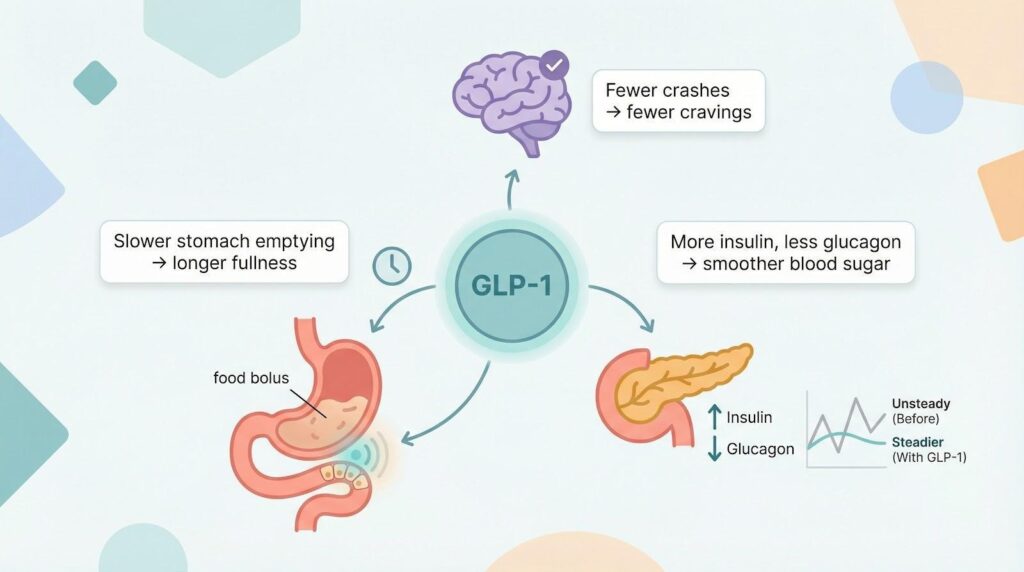
Higher, longer-lasting GLP-1 means smaller portions with less effort. That is why synthetic versions such as semaglutide and tirzepatide trim body weight by roughly 15 percent in large trials; the drugs keep the signal high for days instead of minutes.
Food can lift GLP-1 too, just not as strongly. A 2022 review reported that adding 10 grams of dietary fiber raised native GLP-1 and the sister hormone PYY enough to lower later calorie intake.
Natural supplements try to layer those gentle lifts. Fermentable fiber becomes short-chain fatty acids that tell L-cells to secrete more GLP-1. Berberine and select probiotics trigger parallel pathways. Each push is modest, yet combined with balanced meals they can quiet hunger and move the scale.
Understanding this biology keeps expectations realistic. We are chasing nudges, not overnight miracles. Next, we outline how we scored products to identify the safest, strongest nudge.
How we picked the five stand-out supplements
1. Asuno GLP-1 weight-loss gummies: best overall and easiest to take
The supplement aisle is crowded. Labels shout “clinically proven,” “doctor formulated,” and “nature’s Ozempic.” Marketing claims can make any jar look like a sure thing. We cut through the noise with one question: does the product have the right stuff, in the right amount, for the right person to use every day?
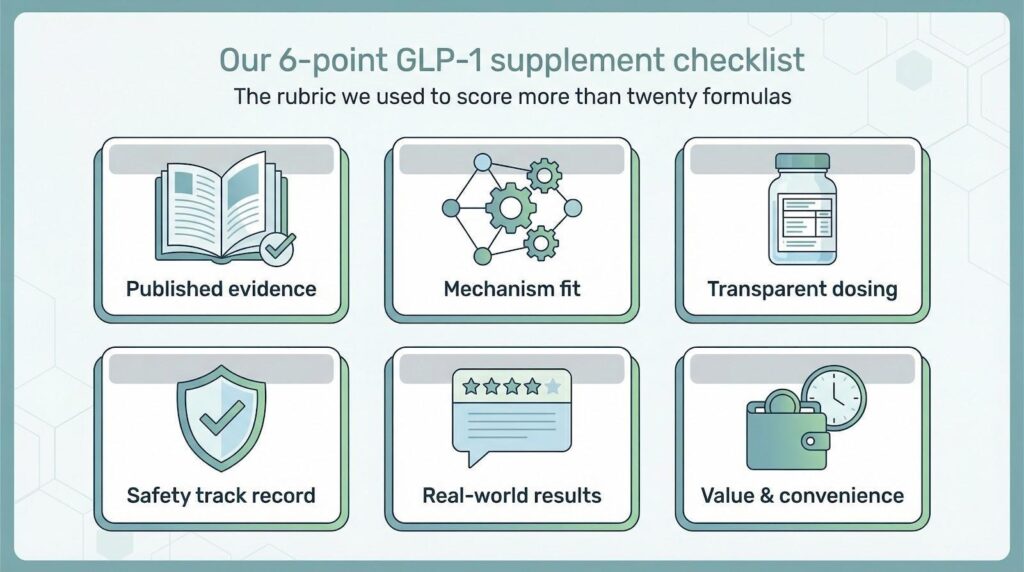
We built a six-point checklist and applied it to more than twenty GLP-1-focused formulas:
- Published evidence. Do the headline ingredients show measurable effects on appetite, GLP-1, or weight in human studies, not just test tubes?
- Mechanism fit. Does the formula trigger the pathways we covered: fiber fermentation, AMPK activation, and gut-microbiome support?
- Transparent dosing. Are exact milligrams listed, and do they match research ranges? No proprietary dustings allowed.
- Safety track record. We favored Generally Recognized as Safe ingredients and brands that outline side-effect guidance.
- Real-world results. We scanned reviews on Reddit, Trustpilot, and Amazon for consistent wins, or red-flag complaints.
- Value and convenience. A supplement must be affordable enough, and easy enough, to take daily; otherwise the best science sits unused.
Products earning top marks in at least four categories stayed on the board. From there, we weighed pros and cons until only five remained. These are the formulas that earned a place in your routine and on this list.
1. Asuno GLP-1 weight-loss gummies: best overall and easiest to take
Imagine taking two orange-flavoured chews after breakfast and feeling comfortable until lunch. Each gummy blends soluble fibre, a hint of apple-cider vinegar, and a patented saffron extract with human data behind appetite control. Fibre gently expands in the stomach, vinegar slows digestion, and saffron helps quiet the “one more bite” urge. Together they supply a mild GLP-1 lift without stimulants or caffeine.
Taste drives consistency. Reviews praise flavour first, hunger relief second, a sequence that keeps the habit alive long after launch-week motivation fades. That enthusiasm shows in the numbers: the Asuno store reports a 4.9-star average from more than 1,200 verified buyers. One-click delivery keeps those satisfied users stocked, removing another barrier to sticking with the routine.
Daily use stays simple: two gummies, no shaker bottle, no refrigeration. Toss a serving in your bag and you are covered during travel or busy mornings.
Trade-offs exist. Gummies contain a small amount of tapioca syrup, so very low-sugar eaters may factor that into their plan. The fibre dose is lower than a full psyllium scoop, so fullness feels gentle rather than heavy.
For adherence, flavour, and portable dosing, Asuno tops the list. A supplement that people enjoy and remember delivers the steady nudge natural GLP-1 support relies on.
2. Lemme GLP-1 Daily: best for stubborn cravings
Kourtney Kardashian’s wellness line raised eyebrows at launch, yet her GLP-1 capsules often sell out. Hype alone does not explain the demand. The formula relies on three botanicals with published human studies: Moro blood-orange extract, Eriomin lemon bioflavonoids, and a patented saffron called Supresa.
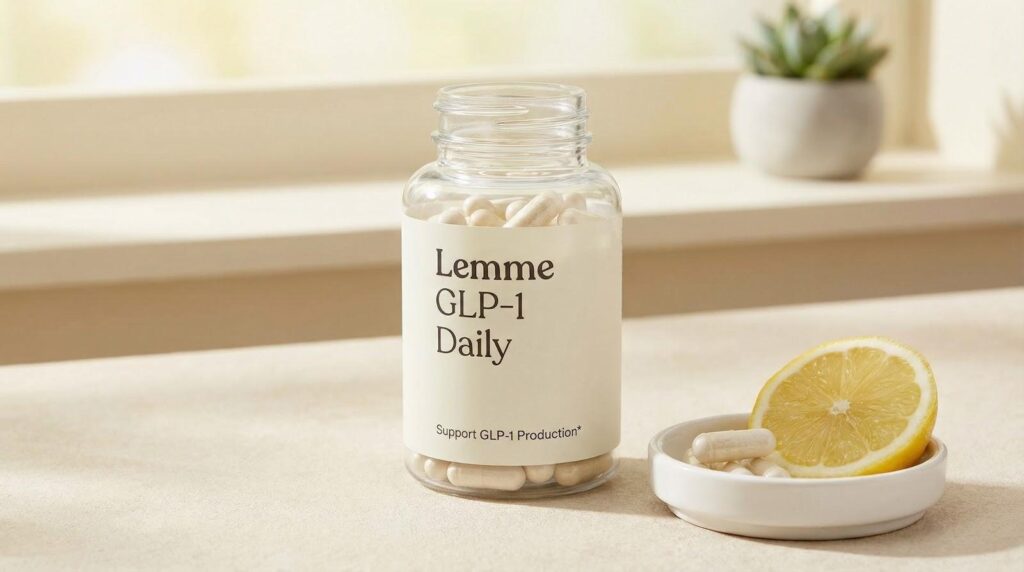
Lemme GLP-1 Daily official product page screenshot.
Polyphenols from the citrus pair slightly raise native GLP-1, and saffron calms reward-based snacking through serotonin pathways. Users notice the effect most around 3 p.m., when the vending machine usually wins. One capsule after breakfast and another after lunch fits easily into a routine.
The powder sits inside a vegan cellulose shell, free of artificial dyes and caffeine, so jitters and sleep disruption stay off the table.
Results appear as quiet wins. Portion sizes decline without strict tracking, cravings fade from urgent to manageable, and mood feels steadier. Many reviewers report weight loss in the 2 to 3 kilogram range over the first month, although individual outcomes vary.
Cost lands in premium territory at about two dollars per day. You are paying for branded extracts and celebrity cachet. Budget shoppers may prefer plain berberine blends for a similar metabolic lift, though without the focused craving support saffron provides.
Bottom line: if mindless grazing derails progress, Lemme GLP-1 Daily offers a stylish, research-backed way to break the snack cycle.
3. Pendulum GLP-1 probiotic: best science-first gut solution
Some weight-loss aids act in the stomach. Pendulum works deeper, reshaping the trillions of gut microbes that tune appetite.
Pendulum GLP-1 probiotic science-first product page screenshot.
The hero strain, Akkermansia muciniphila, strengthens the intestinal lining and supports native GLP-1 production. Pendulum pairs it with Clostridium butyricum and chicory inulin, producing short-chain fatty acids that prompt intestinal L-cells to release satiety hormones.
Rigorous quality control sets the brand apart. Pendulum funds peer-reviewed trials, sequences every batch, and ships each bottle cold to preserve potency. Many endocrinologists recommend it for people who struggle with drug doses yet still pursue hunger relief.
Progress starts gradually. Users often report less bloating during week one, quieter cravings by week four, and around two to three kilograms of weight loss by month three. Once the microbiome shifts, benefits usually persist.
Cost and storage present hurdles. At about eighty-five dollars per month, this is the most expensive pick in our list, and refrigeration keeps the cultures active; skipping either expense wastes the product.
For data-driven readers who track macros and enjoy biohacking, Pendulum offers a science-heavy route toward appetite control, glucose balance, and broader gut health.
4. ColonBroom GLP-1 booster: best fiber-first fullness fix
Hunger wins when plates clear before the brain declares “enough.” A scoop of ColonBroom mixed in water forms a gentle gel that expands in the stomach, activating stretch receptors before the first bite.
The blend combines five grams of soluble fibre with 500 mg of berberine. Fibre ferments into short-chain fatty acids that nudge GLP-1, and berberine activates AMPK to steady blood glucose. This gut + bloodstream tag team beats most single-ingredient capsules.
Flavour (think orange creamsicle) turns the routine into a treat rather than a chore. Stir, wait ten seconds, drink, then follow with another glass of water.
During the first week, fibre pulls water into the intestines; gas and extra bathroom trips often signal your microbiome adjusting. Most users say the bloat eases by week two, giving way to regularity and a calmer appetite. Many report losing around one to two kilograms in the first month alongside balanced meals.
Cost lands near one dollar per serving. Plain store-brand psyllium costs less, yet ColonBroom adds berberine, chromium, and a smoother texture in one scoop for those who prefer an all-in-one fullness solution.
5. Codeage GLP-1 Advantage+: best all-in-one metabolic stack
Juggling multiple bottles can feel overwhelming at breakfast. Codeage solves that hassle with one capsule that reads like a compact supplement shelf: chromium for insulin support, 500 mg of berberine for GLP-1 and AMPK activation, decaffeinated green-tea extract for mild thermogenesis, gymnema to blunt sweet taste, plus taurine, curcumin, and a three-strain probiotic blend for gut balance.
Coverage, not megadoses, drives the formula. Every ingredient lands in the research sweet spot, and the label lists each milligram, so nothing hides behind proprietary blends.
Users report steadier energy, fewer afternoon sugar cravings, and one to two pounds of effortless monthly weight loss after eight weeks. Progress often feels gradual because the capsule relies on ingredient synergy rather than a single heavy hitter, yet reviews note that benefits compound across the second bottle.
The routine calls for four capsules daily, two with breakfast and two with dinner. Starting with half the serving helps sensitive stomachs adapt to green-tea polyphenols and berberine. With so many actives, isolating which one drives a specific benefit proves impossible; this product bets on the whole orchestra rather than a soloist.
For readers who favor clear labels, broad metabolic support, and one tidy stack, Codeage GLP-1 Advantage+ earns a place on the shelf.
Safety first: what to expect and how to stay comfortable
Natural does not mean side-effect free. GLP-1 supplements seldom trigger the severe nausea or pancreatitis seen with injections, yet reviews reveal a few predictable hiccups.
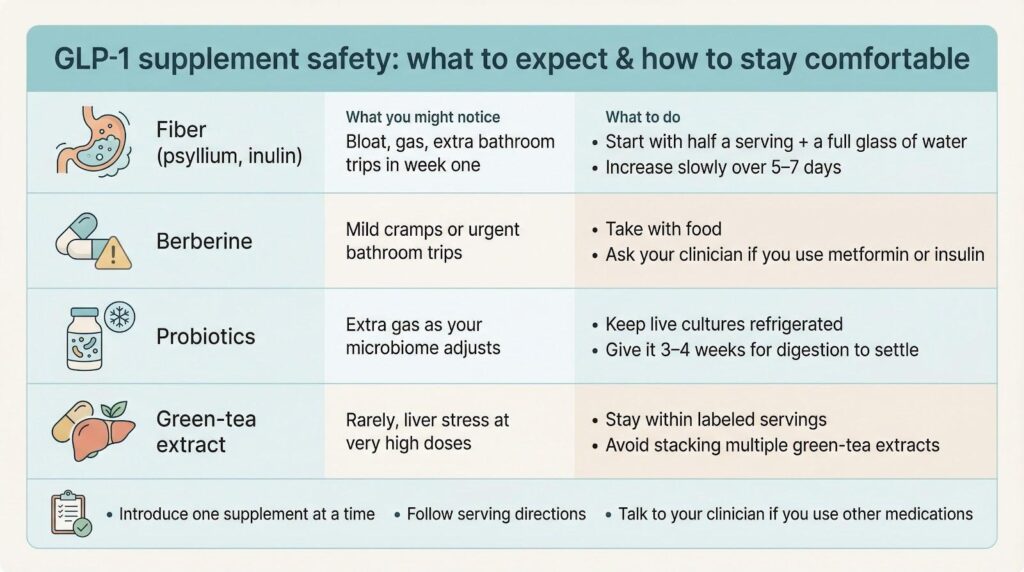
Psyllium, inulin, and other fibres may cause bloat, gas, or loose stools while the gut adapts. Start with half a dose, drink a full glass of water, and most discomfort eases within seven days.
Berberine sometimes brings mild cramps or an urgent bathroom trip. Taking capsules with food usually quiets the pinch. Clinicians note that berberine amplifies many glucose-lowering drugs, so anyone on metformin or insulin should ask a healthcare professional before adding it.
Early probiotic use may add extra gas as the microbiome reshapes. Keep live-culture bottles refrigerated, and expect calmer digestion after four weeks.
Green-tea polyphenols remain safe at labeled amounts, yet very high concentrations have been linked to rare liver stress in case studies. Stay within serving guidelines and avoid stacking multiple green-tea extracts.
Introduce one supplement at a time, follow the serving directions, and check with your provider if you manage chronic conditions or take medication. This simple roadmap keeps the helper in appetite helper.
Frequently asked questions
Are GLP-1 supplements the same as Ozempic?
No. Ozempic keeps GLP-1 signalling elevated for several days. Supplements only prompt a brief rise in your own hormone, giving a gentle appetite nudge rather than a full hunger shut-off.
How long before I notice a difference?
Expect the first changes within seven to ten days for fibre drinks, and three to four weeks for a probiotic such as Pendulum. Track hunger levels and body weight weekly to see progress.
Can I combine two of these products?
Begin with one. Stacking adds cost and side-effect risk without clear proof of extra benefit. If you want to pair ColonBroom for fullness with Pendulum for gut health, confirm the plan with your clinician.
Is it safe to take a GLP-1 supplement alongside semaglutide?
Possibly, under medical supervision. Extra fibre or probiotics often improve tolerance; however, berberine may deepen glucose drops. Follow your prescriber’s guidance.
What else helps results?
Keep protein above 1.6 g per kg of body weight, drink at least two litres of water per day, move for 30 minutes, and sleep seven hours. Supplements work best as boosters to solid habits.
Conclusion
Natural GLP-1 supplements offer gentle, research-backed appetite support, but consistent nutrition, movement, sleep, and professional guidance remain the foundation of sustainable weight management.